AI vs. Human Chatters: An Honest Comparison for 2026
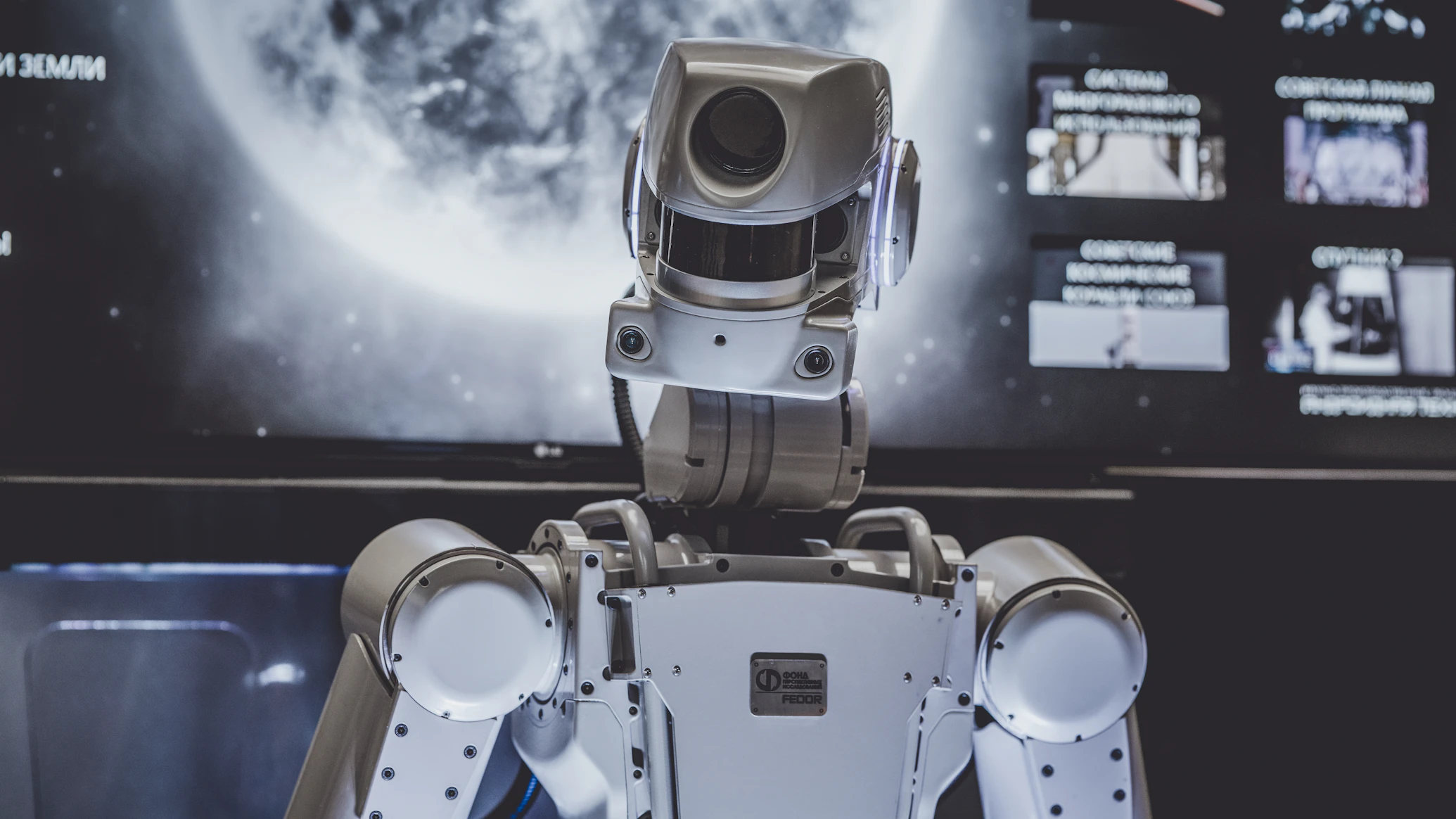
The debate between AI chatbots and human chatters isn't new, but most comparisons you'll find online are written by companies selling one solution or the other. They're biased by design.
This is an attempt at an honest breakdown. Both options have real strengths and real weaknesses, and the right choice depends on your specific situation — your account size, your budget, your goals, and your tolerance for risk.
The Case for Human Chatters
Let's start with what humans do well, because it's important to acknowledge these strengths honestly.
- Complex emotional situations. When a fan is going through something genuinely difficult — a breakup, a loss, a mental health crisis — human chatters can navigate these conversations with a depth of empathy that AI still struggles with. They can read between the lines, recognize when someone needs to be heard rather than entertained, and respond with authentic compassion.
- Creative improvisation. Humans can invent scenarios on the fly, build on unexpected conversation directions, and bring genuine creativity to roleplay situations. While AI is getting better at this, experienced human chatters can still outperform AI in extended, highly creative exchanges.
- Judgment calls. When a conversation enters genuinely ambiguous territory — a fan who might be underage, a request that falls into a legal gray area, a situation that could become a PR issue — human judgment is still more reliable than AI decision-making.
- High-value fan management. Your top 1% of fans — the ones spending hundreds or thousands per month — often benefit from the extra attention and genuine connection that a skilled human chatter or the creator themselves can provide.
The Case for AI Chatbots
Now the other side. AI chatbots have advantages that are structural — meaning they're inherent to the technology, not dependent on finding a particularly good implementation.
- Availability. AI doesn't sleep, take breaks, call in sick, or have bad days. It responds 24 hours a day, 7 days a week, 365 days a year. For creators with fans across multiple time zones, this alone can be worth the switch.
- Response speed. A human chatter manages multiple accounts and conversations simultaneously. Response times of 10-30 minutes are standard. AI responds in seconds. Studies consistently show that response speed is one of the biggest drivers of PPV conversion — fans are most willing to spend in the minutes immediately after sending a message.
- Consistency. Human chatter quality varies by the hour. They get tired at 2 AM. They get frustrated after dealing with a difficult fan. They have personal problems that affect their work. AI delivers the same quality every single message, regardless of time or volume.
- Scalability. A human chatter can handle 3-5 accounts effectively. AI can handle hundreds simultaneously with no degradation in quality. For agencies managing multiple creators, this scalability advantage is significant.
- No credential sharing. This is an underappreciated advantage. Human chatters need your OnlyFans login credentials to do their job. That means someone outside your control has full access to your account, your earnings, and your fan list. AI systems that work through APIs eliminate this risk entirely.
The Real Cost Comparison
Cost is usually the first thing creators ask about, and the comparison is more nuanced than it appears.
Human chatter costs:
- Typical rate: 20-30% of messaging revenue, or a flat monthly salary of $1,500-$4,000 per account
- Training time: 1-3 weeks before a new chatter is fully effective, during which you're paying but not getting optimal results
- Turnover cost: Chatters leave frequently. The adult content industry has high turnover, and every time you lose a chatter, you restart the training process
- Management overhead: You or someone on your team needs to review chatter performance, provide feedback, and handle scheduling. This time has a cost too
AI chatbot costs:
- Typical rate: 10-20% of messaging revenue as a flat fee, or a fixed monthly subscription
- Setup time: A few hours to configure persona, backstory, and boundaries — then it's running
- No turnover: The AI doesn't quit. Your persona settings, conversation history, and fan profiles persist indefinitely
- Iteration cost: You'll spend some time reviewing and refining, especially in the first month, but this decreases significantly over time
For most creators, AI is significantly cheaper in both direct costs and indirect costs (time, management, training). The gap widens as you scale — an agency managing 20 creators would need a team of 10-15 chatters, with all the HR overhead that entails, versus a single AI platform.
The Risk Comparison
Both options carry risks, but they're different types of risks.
Risks with human chatters:
- Credential exposure. Your chatter has your login. If they're disgruntled, careless, or dishonest, your account is vulnerable. There have been documented cases of chatters stealing content, redirecting fans to competing accounts, or simply leaking credentials.
- Inconsistency. A great chatter on Monday might be a mediocre chatter on Friday. Quality fluctuates with mood, fatigue, and personal circumstances. Some fans will notice the inconsistency and disengage.
- Going off-script. Human chatters sometimes make judgment calls that the creator wouldn't approve of — being too aggressive with sales, engaging with topics the creator wants avoided, or making promises the creator can't keep.
Risks with AI chatbots:
- Edge case failures. AI can produce responses that are technically wrong or contextually inappropriate. While rare in well-built systems, these failures can be jarring when they happen.
- Fan detection. If a fan definitively concludes they're talking to AI, the trust damage can be severe. This risk is highest with basic AI systems and lowest with advanced multi-agent implementations.
- Over-reliance. Creators who fully delegate messaging and stop reviewing conversations can miss important signals — a high-value fan showing signs of disengagement, a pattern of complaints, or edge cases the AI isn't handling well.
When to Use Each — And When to Combine Both
The honest answer for most creators isn't “AI or human” — it's knowing when to use each.
AI is the better choice when:
- You need 24/7 coverage and can't afford round-the-clock human chatters
- You want consistent quality across hundreds or thousands of fan conversations
- Response speed is a priority for your monetization strategy
- You're uncomfortable sharing your account credentials with employees
- You're managing multiple accounts and need scalability
Human chatters are the better choice when:
- You have a small number of very high-value fans who expect deep personal engagement
- Your content niche requires extremely creative or nuanced conversations that current AI can't match
- You're in the very early stages of building your account and need to establish your authentic voice before you can replicate it
The hybrid approach is increasingly popular and often the most effective:
- AI handles the majority of conversations — casual chat, standard flirting, initial fan engagement, and routine sales.
- Human oversight catches edge cases, handles sensitive situations, and manages VIP fans who warrant extra attention.
- The creator steps in personally for the highest-value interactions — custom content requests from top spenders, fans going through genuine difficulties, or situations where the personal touch makes a meaningful difference.
The Trend Line
It's worth noting where the trend is heading. AI conversation quality is improving rapidly — the gap between AI and skilled human chatters narrows with every iteration. The cost advantages of AI are structural and permanent. And the risks associated with human chatters (credential sharing, turnover, inconsistency) aren't going away.
This doesn't mean human chatters will disappear. There will likely always be a role for human judgment and creativity in high-value or sensitive interactions. But the baseline work of fan messaging — which represents 80-90% of total conversation volume — is increasingly better handled by AI, both in terms of quality and economics.
Whatever you choose, make the decision based on your specific situation, not on marketing claims from either side. Test both options if you can. Measure the results. And be willing to adjust your approach as both the technology and your business evolve.